
SoundCARE - AMBIENT delirium MONITORING

Academic project at nus - division of industrial design (2015)

Merit Award winner of the LiteON Design Innovation Award 2015

SoundCARE is an ambient monitoring system that aims to prevent detrimental psychological disorders (i.e. Delirium) caused by stressful ICU (Intensive Care Unit) conditions.


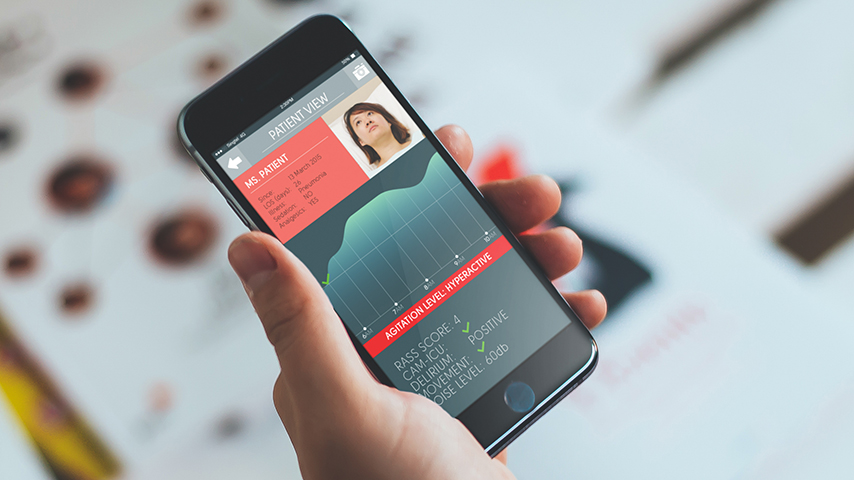
An imaging device assesses patients' consciousness and agitation levels by tracking head movement. Nurses are alerted when patients are awakening or becoming agitated, ensuring prompt intervention and provision of healthcare.
The device concurrently emits soothing natural sounds to calm patients down and even aids in pain management. By utilizing natural sounds such as the chirping of birds, patients experience improved recovery from a less sterile and more natural ICU environment.

The devices can be easily strapped onto the sides of the hospital bed frame. 


Being warded in an Intensive Care Unit (ICU) is an extremely stressful and traumatizing experience. This build-up of stress causes about two-thirds of ICU patients experience Delirium; a psychological condition that renders patients unable to think clearly (inattention) and act rationally (confusion). Delirium can further complicate illnesses which results in longer hospital stays, increases overall healthcare costs and affect clinical outcomes. It can even cause long-term cognitive deficiencies (e.g Depression, Post-Traumatic Stress Disorder, etc.). SoundCARE is an ICU ambient monitoring system, aimed at preventing detrimental psychological syndromes (i.e. Post-Traumatic Stress Disorder, Depression and Delirium) that results from a build-up of stress throughout an ICU stay. It employs a camera to tracks patients’ head movements and assess their consciousness & agitation levels. The device is able to detect when patients are regaining consciousness from a sedated state and when patients are becoming increasingly hyperactive. Nurses are immediately alerted via a mobile application when such activities are detected, ensuring timely healthcare intervention. This alleviates the workload of nurses, and improves their response rates. Once patient agitation is detected, the device concurrently emits soothing natural sounds that have been proven to calm patients down, and even aid in pain management. Natural auditory stimulus; such as the chirping of birds, are played periodically at landmark intervals throughout the day (i.e. morning, noon and evening) to simulate a natural human environment, reorienting patients to the current time while also breaking the monotony of the space. By utilizing natural sounds such as the chirping of birds, patients experience a less sterile and more natural environment in the ICU to recover. This two-pronged approach considers all stake holders in the ICU; namely the patients & healthcare staff, to ensure the provision of comprehensive and quality healthcare.